
If you have a basement in Northeast Ohio, there is a good chance you have a sump pump. Most homeowners know it is there and that it is supposed to keep the basement dry. Fewer know how it actually works, how long it typically lasts, or what to watch for before it fails. Given how hard Cleveland winters and springs can be on basements, it is worth understanding what you are relying on.
What a Sump Pump Actually Does
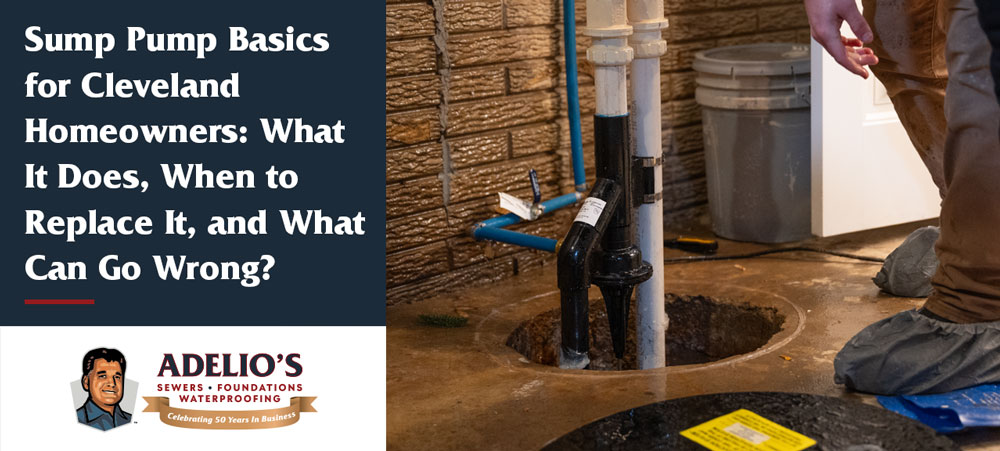
A sump pump sits in a pit dug at the lowest point of your basement floor. When groundwater or seepage collects in that pit and rises to a certain level, a float switch triggers the pump to turn on. The pump then pushes the water through a discharge pipe that carries it away from the house, usually to a storm drain, a dry well, or daylight at the edge of the property.
In homes with interior drain tile installed along the perimeter of the basement, that system channels water directly to the sump pit. The pump and the drain tile work together as a team. Without functioning drain tile feeding into the pit, the pump has limited reach.
How Long Does a Sump Pump Last?
Most sump pumps last somewhere between seven and ten years with normal use. In Northeast Ohio, where pumps can run heavily during spring and after major storms, that lifespan can be on the shorter end. If your pump is approaching or past the ten-year mark, it is worth thinking about replacement before it fails rather than after.
Signs Your Sump Pump May Need to Be Replaced
- Running constantly or cycling on and off very frequently can indicate the pump is undersized for the volume of water it is handling, or that the float switch has a problem.
- Making unusual noises like grinding or rattling often points to a worn impeller or debris caught in the pump mechanism.
- Visibly rusting or corroding on the exterior of the unit is a sign the pump has had a hard life and may be close to the end of its service.
- Failing to activate when water is present in the pit means the float switch has likely failed, which is one of the most common sump pump problems.
- Running during a storm but not keeping up with the water level suggests the pump no longer has adequate capacity for your conditions.
What Can Go Wrong and When
Even a pump that is in good condition can fail if the circumstances are against it. A few situations Cleveland homeowners run into regularly:
- Power outages during severe storms are one of the most common reasons sump pumps fail at the worst possible time. A battery backup system or a water-powered backup pump can keep things running when the electricity goes out.
- A frozen or blocked discharge line will stop the pump from moving water even if it is running fine otherwise. This happens more often in winter when the exterior discharge point is not properly protected from freezing temperatures.
- A stuck float switch can cause the pump to run continuously or not run at all. Floats can get tangled, jammed against the pit wall, or simply wear out over time.
- An undersized pit fills up faster than the pump can clear it during a heavy rain event, which leads to overflow even with a functioning pump.
The One Thing That Makes the Biggest Difference
Testing your sump pump regularly is the single most effective thing you can do to avoid a surprise failure. Pour a bucket of water into the pit and confirm the pump activates, runs, and shuts off cleanly. Do this once or twice a year and always before the spring season starts. If something seems off, it is much better to find out during a dry week than during a storm.
Sump Pump Service and Waterproofing in Northeast Ohio
Adelio’s Contracting works with sump pumps, interior drain tile, and full basement waterproofing systems throughout the Cleveland area. If your pump is getting old, if you are not sure it is working properly, or if it is keeping up but your basement still gets wet, we can help figure out what is going on.
We serve Cleveland, Euclid, Lyndhurst, Willoughby, Mentor, Solon, Strongsville, Lakewood, and communities throughout Northeast Ohio.
Call (440) 943-2233 or book online to schedule your free evaluation.