
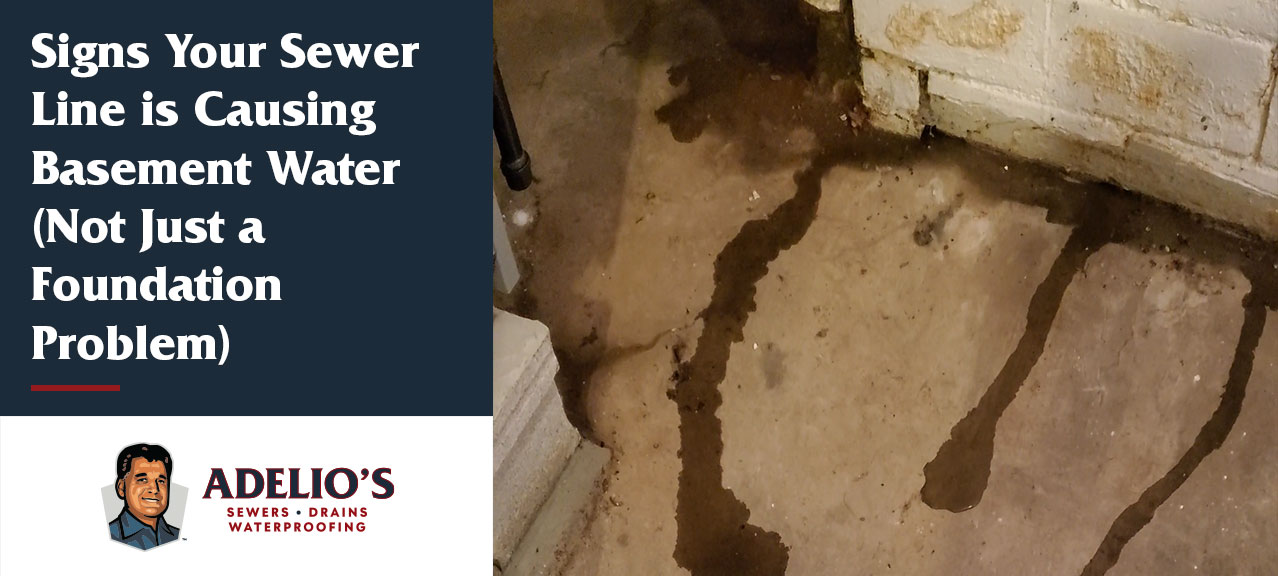
When water shows up in your basement, the first instinct is to blame the foundation. And sometimes, that’s exactly the problem. But not always. In many cases, a failing sewer line is quietly responsible—and without the right diagnosis, homeowners spend thousands of dollars waterproofing a foundation that isn’t actually the culprit.
Northeast Ohio homeowners often deal with older homes, aging clay sewer lines, heavy seasonal rainfall, and old growth tree roots. Understanding the difference between each can save significant time, money, and frustration. Here’s how to tell when your sewer line—not your foundation—is behind that basement water.
Why Sewer Lines Get Mistaken for Foundation Issues
Sewer line leaks and foundation water intrusion can sometimes look nearly identical on the surface. Both show up as moisture, puddles, or wet walls in the basement. But the source is completely different—and so is the fix.
A foundation problem typically involves groundwater seeping through cracks, gaps, or porous foundation walls or floors under hydrostatic pressure. A sewer line problem means wastewater or sewage is escaping from a cracked, offset, or deteriorated pipe beneath or around your home. One requires waterproofing. The other requires sewer repair. Treating the wrong one wastes money and leaves the real problem untouched.
Warning Signs the Sewer Line Is the Real Problem
Your home will usually give you clues. Watch for these indicators that point specifically to a sewer line issue:
- Water appears in the basement even during dry weather (no rain, no groundwater pressure)
- Puddles or wet spots occur near or around floor drains, toilets, or utility sinks
- A distinct sewage or sulfur odor accompanies the moisture
- Multiple drains throughout the home are slow or backing up at the same time
- Gurgling sounds come from toilets or floor drains when water is used elsewhere
- You notice wet patches of soil or unusually lush grass above where your sewer line runs
If water in your home only shows up after heavy rain, that’s one pattern. If moisture appears on a dry day after running the dishwasher or doing laundry, the sewer line is a far more likely cause.
Common Sewer Line Problems That Cause Basement Water
Understanding what’s happening underground helps explain what you’re seeing inside. In older Cleveland-area homes, sewer lines are often made of clay or cast iron—materials that don’t last forever. Typical culprits include:
- Cracked or fractured pipes that allow wastewater to leak into the surrounding soil and to seep under the basement floor
- Root intrusion that can separate or block sewer piping and creates gaps where water escapes
- Bellied or sagging lines where water pools and eventually backs up or leaks
- Pipe offsets or separations caused by soil movement or freeze-thaw cycles shifting the ground beneath your home
- Deteriorated pipe material that has corroded or collapsed over decades of use
Any of these conditions can result in water—or sewage—making its way into the basement without a single crack in your foundation wall.
How to Know for Sure: Camera Inspection
The only reliable way to rule out—or confirm—a sewer line problem is a professional CCTV camera inspection. A technician feeds a high-resolution camera through the sewer line to get a clear look at exactly what’s happening inside.
This is especially important before investing in any waterproofing system. If the water source is a broken sewer line, no interior drain tile or sump pump will solve it, and will occasionally make the issue worse. A camera inspection gives you real answers and protects you from paying for the wrong repair.
Homes over 30 years old, properties with large trees nearby, or any home with a history of drain issues should make camera inspections a first step—not a last resort.
The Risk of Getting the Diagnosis Wrong
Misdiagnosing sewer water as a foundation leak doesn’t just waste money. It can create serious health hazards. Sewage contains bacteria, pathogens, and gases that pose real risks when they infiltrate a living space. Left unaddressed, the contamination spreads, odors worsen, and the damage compounds.
On the flip side, homeowners who treat a foundation crack while a broken sewer line keeps leaking will keep seeing water—no matter how much waterproofing they install. Getting the right diagnosis first is the only way to solve the problem for good.
What to Do If You Suspect a Sewer Line Issue
Don’t guess. If you’re seeing any of the warning signs above—especially moisture on dry days, sewage odors, or backups coinciding with basement water—the next step is a professional evaluation.
At Adelio’s Contracting, we’ve helped Northeast Ohio homeowners correctly diagnose and repair sewer line problems for over 50 years. We offer:
- CCTV sewer camera inspections to identify the exact source of the problem
- Sewer line repairs, relining, and full replacements
- Expert guidance on whether waterproofing, sewer repair, or both are needed
- Honest assessments with no upselling or unnecessary work
We believe in solving the actual problem—not the one that’s easiest to sell.
Get the Right Answer Before You Spend a Dollar on Repairs
Basement water is stressful. But spending thousands on the wrong fix is even more so. If something feels off—if the water doesn’t quite match what you’d expect from a foundation problem—trust that instinct and get a sewer inspection first.
Contact Adelio’s Contracting today to schedule a camera inspection or speak with one of our experts. We’ll help you find the real source of the problem and give you a clear, honest path forward.