
If you’ve got a crawl space that feels damp, smells musty, or has you worried about mold and pests, you’ve probably started researching crawl space encapsulation Cleveland homeowners keep talking about. It’s one of the most effective ways to protect a home’s structure and air quality, but the cost question is usually what stops people from moving forward.
Here’s the honest answer: there’s no single number that applies to every home. Encapsulation cost depends on the size of your crawl space, its current condition, and what your specific home needs. Below, we’ll walk through what typically drives the cost, why Northeast Ohio homes face some unique challenges, and how to know if encapsulation is the right investment for your property. If you want to see how this fits into the bigger picture of protecting your foundation, our problems we solve page is a good place to start, and you can always reach out to Adelio’s Contracting directly with specific questions about your home.
What Is Crawl Space Encapsulation?
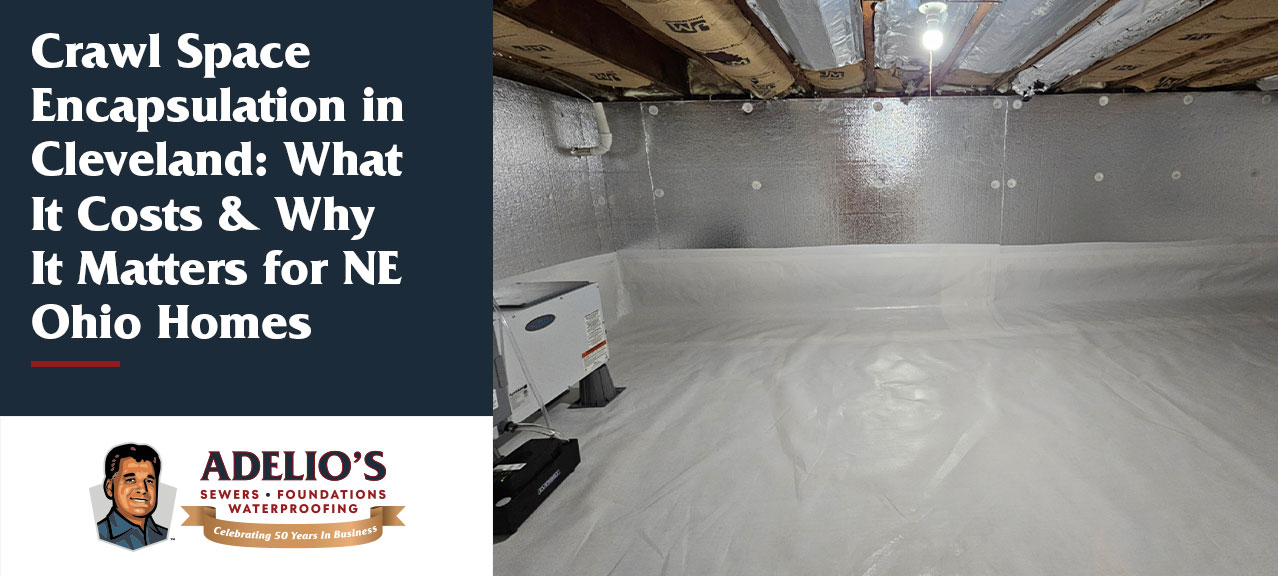
Encapsulation seals your crawl space off from outside moisture and air. That typically means installing a heavy-duty vapor barrier across the ground and up the walls, sealing vents and gaps, and in many cases adding a dehumidifier to keep humidity under control. The goal is a dry, sealed space instead of an open one that pulls in ground moisture, humid outside air, and whatever pests find their way in through vents and gaps.
This is different from simply laying down plastic sheeting on the ground, which only addresses part of the problem. A properly encapsulated crawl space seals the entire environment, not just the dirt floor.
Why Crawl Spaces Are a Bigger Deal in Northeast Ohio Than You’d Think
Cleveland-area homes face a specific set of conditions that make crawl space moisture more common, and more consequential, than in drier climates:
- Humid summers and wet springs push moisture into crawl spaces through the soil and through vents that were originally designed to “air out” the space, a practice now understood to often make moisture problems worse rather than better.
- Freeze-thaw cycles in winter can shift soil and create new gaps where cold, damp air infiltrates the crawl space.
- Older homes throughout Lakewood, Cleveland Heights, and Rocky River were often built with crawl space designs that predate modern moisture-control standards.
- Clay-heavy soil common across the region holds water longer, keeping the ground beneath your home damp for extended stretches after rain or snowmelt.
Left unaddressed, that moisture doesn’t stay contained to the crawl space. It can affect insulation, wood framing, indoor air quality, and even contribute to the kind of basement water problems many Cleveland homeowners already deal with separately.
What Typically Drives the Cost of Encapsulation
Nationally, encapsulation projects most often fall somewhere between $1,500 and $15,000, with many homeowners landing closer to the middle of that range depending on scope. That’s a wide window, and for good reason: a handful of factors do most of the work in determining where your project falls.
Size of the Crawl Space
This is the single biggest driver. Encapsulation is generally priced per square foot, so a larger crawl space naturally requires more vapor barrier material and more labor hours than a smaller one.
Current Condition
A dry crawl space with no history of moisture needs a more straightforward scope: vapor barrier, vent sealing, and possibly a dehumidifier. A crawl space with standing water, active mold, or structural damage needs additional work before encapsulation can even begin, which adds to the overall project cost.
Access and Layout
Tight clearance, irregular shapes, and multiple support piers all add labor time. Crawl spaces under 24 inches of clearance, for example, are more time-consuming to work in than taller ones.
Additional Systems Needed
A dehumidifier, drainage system, or insulation upgrade adds to the base cost of a vapor barrier alone. Whether you need these additions depends on how much moisture your crawl space typically deals with and what a professional finds during inspection.
Repairs Uncovered During the Process
Sometimes an encapsulation project reveals wood rot, pest damage, or foundation issues that weren’t visible from a quick look. Addressing those before sealing the space is a necessary part of doing the job right, even though it adds to the total.
This is exactly why we don’t publish a flat price for encapsulation. The only way to get an accurate number for your specific home is a hands-on evaluation, which is also the only way to know whether your situation calls for encapsulation alone or a combination of services, including foundation repair if your crawl space issues are tied to structural movement.
Why Encapsulation Is Worth the Investment for Many Northeast Ohio Homes
Cost is only half the conversation. The other half is what an unsealed, moisture-prone crawl space is quietly doing to your home over time.
Air Quality
A significant portion of the air you breathe on your first floor often originates in the crawl space below it. Moisture, mold spores, and musty odors don’t stay contained down there.
Structural Protection
Persistent moisture contributes to wood rot in floor joists and support beams over years of exposure. Keeping the space dry protects the structural wood your home depends on.
Pest Prevention
Damp, dark crawl spaces are attractive to insects and rodents. Sealing the space removes both the moisture and the entry points that draw them in.
Energy Efficiency
An open, humid crawl space makes your HVAC system work harder to condition your home. A properly sealed and, when needed, dehumidified crawl space can ease that load.
Is Encapsulation Right for Your Home?
Encapsulation tends to make the most sense if you’re noticing:
- A musty or damp smell on the first floor, especially near exterior walls
- Visible moisture, condensation, or mold in the crawl space
- Sagging insulation or insulation that’s fallen away from the subfloor
- Evidence of pests entering through crawl space vents or gaps
- Higher-than-expected humidity readings on the main floor
If any of these sound familiar, the next step is a professional look at the space itself rather than guessing at scope or cost from the outside.
Get an Accurate Assessment for Your Cleveland Home
Every crawl space is different, and so is every price tag. Rather than working from a national average, the most useful next step is having a local team assess your specific space, your soil conditions, and what your home actually needs.
Our maintenance and service plans can also help keep an encapsulated crawl space performing the way it should for years after installation, so the investment keeps paying off.
Contact Adelio’s Contracting to schedule a crawl space evaluation. We’ll walk you through exactly what we find, explain what it would take to seal and protect your space, and give you a clear, honest number before any work begins.