You’re standing in your basement and notice something that makes your stomach drop. The wall isn’t quite straight anymore. There’s a slight curve, maybe a horizontal crack running across the middle. You press your hand against it and realize the wall is actually bowing inward. Your mind races with questions. Is this dangerous? How did this happen? What’s it going to cost to fix?
Homeowners dealing with bowing basement walls face one of the most serious structural issues a house can experience. The good news is that modern repair methods can stabilize and even straighten bowed walls when you catch the problem early. Understanding what causes bowing basement walls helps you recognize warning signs early and take action before minor issues become major structural failures.
Cleveland’s unique combination of clay-rich soils, harsh freeze-thaw cycles, and proximity to Lake Erie creates specific challenges for basement foundations. These environmental factors mean bowing walls are more common here than in many other regions. This guide explains exactly what’s happening to your foundation, why it’s happening in Cleveland, and what proven solutions can fix it.
Understanding Bowing Basement Walls: What Cleveland Homeowners Need to Know
Bowing basement walls occur when external pressure pushes foundation walls inward, causing them to curve, bulge, or lean. This isn’t a cosmetic issue or something you can ignore. It’s a structural problem that signals your foundation is under stress that exceeds its design capacity.
The progressive nature of bowing basement walls means the problem worsens without intervention. The pressure causing the initial bowing doesn’t go away on its own. It continues pushing against your compromised wall, and that wall continues moving inward. What starts as a barely noticeable curve can progress to severe bowing that threatens your home’s structural integrity.
Here’s what’s important to understand: bowing walls don’t necessarily mean your home was poorly built. Most foundation walls are designed to handle normal soil pressure. But when external forces exceed those design limits, even well-constructed foundations can bow. The question isn’t whether your builder cut corners. The question is what’s creating excessive pressure against your foundation and how to address it.
How Hydrostatic Pressure on Foundation Walls Causes Bowing
The primary culprit behind most bowing basement walls is something called hydrostatic pressure. Hydrostatic pressure on foundation walls occurs when water-saturated soil pushes against your basement with thousands of pounds of force.
Here’s how it works. When soil around your home becomes saturated after heavy rains or snowmelt, it becomes extremely heavy. That water-logged soil exerts tremendous lateral pressure against your foundation walls. The magnitude of this force is substantial. Hydrostatic pressure can reach tens of thousands of pounds, which most foundation walls are not designed to withstand.
Think of it like this. Imagine trying to hold back a swimming pool full of water with just a wall. The water pushes constantly against that wall with enormous force. That’s essentially what’s happening to your basement walls when the soil around them becomes saturated. The pressure is relentless and doesn’t let up until the soil dries out.
When soil around a home becomes saturated, it exerts thousands of pounds of pressure on foundation walls, causing them to bend, bulge, or bow inward. Your foundation wall, even though it’s made of concrete or block, can only resist so much force before it starts to give way. That’s when you see the bowing begin.
Managing hydrostatic pressure on foundation walls requires both repair and prevention strategies. Fixing the bowed wall addresses the symptom. Managing water around your foundation addresses the cause. Both are necessary for a complete solution.
Why Bowing Basement Walls Cleveland Homes Face Are So Common
The unique conditions creating bowing basement walls Cleveland homeowners experience stem from our region’s clay-rich soils, aggressive weather patterns, and geographic location. Understanding these local factors helps explain why foundation issues are so prevalent in Northeast Ohio.
Cleveland’s Clay Soil Challenge
Clay-rich soils, which are common in the Cleveland region, present a particularly challenging scenario for basement foundations. These soils have the capacity to absorb significant amounts of water and expand, creating substantial lateral pressure against basement walls.
Clay soil acts like a sponge. When it rains, clay absorbs water and swells. This expansion creates pressure against anything in its path, including your foundation walls. Unlike sandy soils that drain quickly, clay holds onto moisture for extended periods. This means your foundation experiences sustained pressure long after the rain stops.
When saturated clay soil expands, it exerts lateral force on foundation walls, leading to potential structural damage that manifests as bowing, buckling, or inward movement. The longer the soil stays saturated, the more time that pressure has to push your walls inward.
Freeze-Thaw Cycles and the 36-Inch Frost Line
Cleveland operates under a 36-inch frost line requirement, which means foundations must extend at least 36 inches below the ground surface to prevent frost heave. The region experiences aggressive freeze-thaw cycles that compound foundation stress.
Here’s what happens during these cycles. Water in the soil freezes when temperatures drop below 32 degrees. When water freezes, it expands. That expansion creates additional pressure against your foundation walls. Then when temperatures rise, the ice thaws and contracts. This cycle repeats dozens of times each winter.
The combination of Cleveland’s heavy clay soils with these freeze-thaw cycles necessitates careful planning and execution of foundation work. Each freeze-thaw event progressively stresses your foundation. Over years and decades, this cyclical stress can contribute to wall movement and bowing.
Lake Erie’s Influence on Moisture Levels
Cleveland’s proximity to Lake Erie contributes to elevated moisture levels in the soil. The lake effect brings increased precipitation and humidity that keeps soil moisture levels high throughout much of the year. This persistent moisture means foundations face more consistent hydrostatic pressure than homes in drier climates.
Addressing bowing basement walls Cleveland properties develop requires understanding these local environmental factors. Solutions that work in other regions might not be sufficient for Cleveland’s unique combination of clay soil, freeze-thaw cycles, and high moisture levels.
Warning Signs: From Basement Wall Cracks to Visible Bowing
Early detection of bowing walls is critical for preventing catastrophic failure and minimizing repair costs. Recognizing the warning signs helps you catch foundation problems before they progress to dangerous levels.
Structural Indicators You Can See
Horizontal cracks running across your basement wall, especially in the middle section, are one of the clearest signs that your wall is being pushed inward by external pressure. These cracks typically appear first because the middle of the wall experiences the greatest stress from soil pressure.
Stair-step cracks following the mortar joints in block or brick foundations suggest the wall is shifting and rotating under pressure. This crack pattern indicates differential movement where different parts of your wall are moving at different rates.
Visible bulging or leaning provides direct evidence that hydrostatic pressure is forcing the wall inward. You might notice this by looking along the length of the wall from one end. A wall that should be perfectly straight will show a noticeable curve or bulge.
Secondary Signs Throughout Your Home
Foundation movement doesn’t just affect your basement. It impacts your entire house. Doors and windows that no longer open or close smoothly occur when foundation shifts cause misalignment in the home’s structure. If doors that used to close easily now stick or won’t latch, your foundation may be moving.
Water and moisture intrusion often accompany bowing walls. Cracks in walls create pathways for water entry, leading to dampness and potential mold growth. If you notice water seeping through cracks during rain, that’s a clear sign your wall has been compromised.
Many homeowners wonder how much basement wall bowing is acceptable before repairs become necessary. The honest answer is that any noticeable bowing warrants professional evaluation. Even minor bowing indicates your wall is under stress. Without intervention, that stress continues and the bowing progresses.
Is Bowed Wall Dangerous? Understanding the Risks
The question is bowed wall dangerous has a clear answer: yes, bowed walls pose serious structural and safety risks. Understanding these risks helps homeowners recognize why prompt action matters.
Structural Collapse Risk
As a wall continues to bow under persistent hydrostatic pressure, it progressively loses its ability to support the house above it. This deterioration can lead to catastrophic failure where the wall can no longer bear the structural load.
Continuous pressure without remediation can result in total wall failure. This isn’t meant to scare you, but you need to understand the reality. A severely bowed wall can collapse, potentially causing damage to your home’s structure and creating dangerous conditions for anyone in the basement.
Health and Property Damage
Cracks in bowing walls create entry points for water, leading to damp basement conditions that promote mold growth. Mold exposure poses health risks to residents, particularly those with respiratory sensitivities.
Beyond health concerns, water intrusion damages stored items, finished basement spaces, and can lead to wood rot in structural elements like floor joists and rim boards. The musty smell that develops in damp basements permeates your entire home and is difficult to eliminate without addressing the underlying moisture problem.
Financial Consequences
Delaying repairs invariably results in more extensive damage and significantly higher costs. What might start as a moderate repair requiring wall anchors or carbon fiber reinforcement can escalate to requiring complete wall excavation and rebuilding if left unaddressed.
Foundation issues represent major red flags for potential buyers and can severely impact mortgage approvals. The presence of bowing walls can deter buyers entirely or result in substantial price reductions during negotiations.
Bowing Wall Repair Options: Carbon Fiber vs. Wall Anchors
Modern foundation repair technology provides effective solutions for stabilizing and straightening bowed basement walls. The two primary methods used in Cleveland are carbon fiber reinforcement and wall anchor systems. Understanding how each works helps you make informed decisions about your foundation wall repair.
Foundation Wall Repair: Choosing the Right Method
The appropriate repair method depends on several factors: the severity of bowing, the type of foundation wall, accessibility for installation, and your specific goals. Some situations call for stabilization to prevent further movement. Others require active correction to straighten walls that have already moved significantly.
Professional assessment determines which approach makes sense for your specific situation. A qualified foundation contractor examines your walls, measures the extent of bowing, evaluates soil conditions, and recommends the most effective solution.
Carbon Fiber Wall Reinforcement: Modern Solution for Stabilization
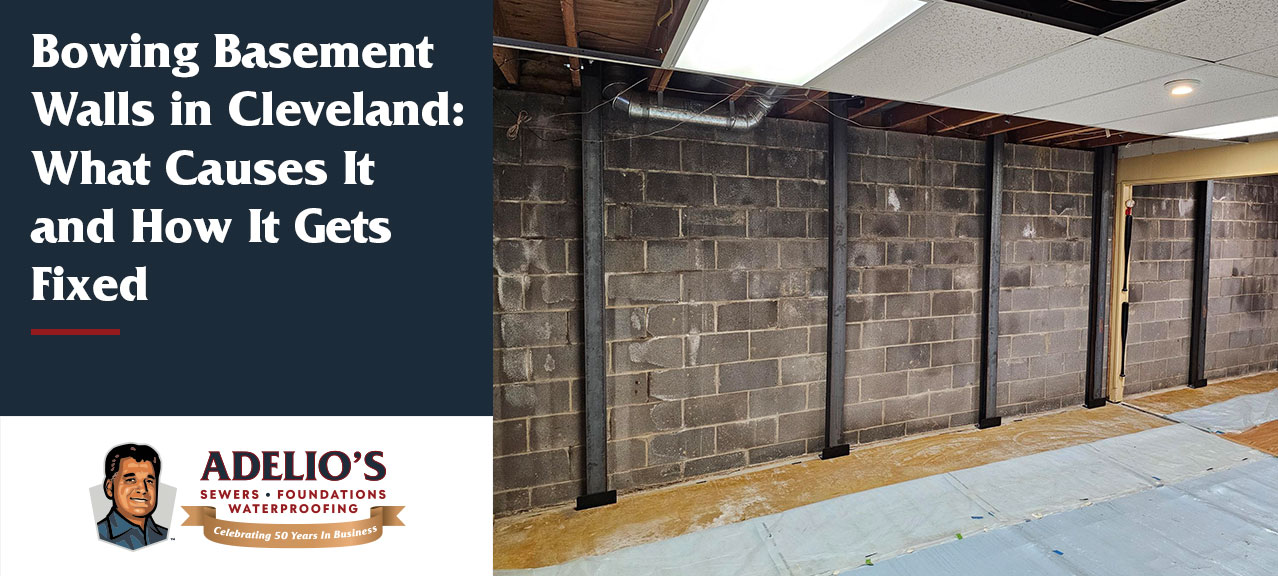
Modern carbon fiber wall reinforcement provides a minimally invasive solution for stabilizing foundation walls experiencing lateral movement. This method is particularly effective for walls showing minor to moderate bowing and horizontal cracking.
How Carbon Fiber Works
Carbon fiber reinforcement involves applying high-strength carbon fiber straps vertically to the interior face of your foundation wall. These straps are bonded to the wall using industrial-grade epoxy resin. Once cured, the carbon fiber becomes an integral part of your wall structure, preventing further inward movement.
The strength of carbon fiber wall reinforcement comes from materials ten times stronger than steel. This exceptional strength-to-weight ratio means carbon fiber provides immense reinforcement without adding significant weight to your foundation.
Installation involves applying structural epoxy to bond carbon fiber grids to the interior wall surface. The contractor cleans and prepares the wall surface, applies epoxy, presses the carbon fiber straps into place from floor to ceiling, and seals everything with another layer of epoxy. The straps sit flush against the wall and can be painted over to minimize visual impact.
Carbon Fiber Advantages
The system is non-corrosive, making it ideal for humid basement environments. Unlike steel reinforcement that can rust over time, carbon fiber maintains its strength indefinitely in damp conditions.
Installation typically completes in less than one day. This quick turnaround means minimal disruption to your daily life. You don’t need to move out or avoid your basement for extended periods.
No exterior excavation required. This is a significant advantage because it means no damage to your landscaping, no risk of hitting underground utilities, and no weather delays. All work happens from inside your basement.
Available Carbon Fiber Systems
The CarbonArmor® Wall Reinforcing System utilizes carbon fiber strips combined with high-strength epoxy resin to absorb pressure from the wall. This technology is trusted by various engineering sectors, including the U.S. Department of Defense, indicating its reliability and strength.
The Fortress InvisiBeam system combines carbon fiber with structural anchoring to ensure effective load transfer through the wall. This system provides reinforcement without taking up significant basement space, making it advantageous when exterior excavation is impractical due to landscaping or other structures.
When Carbon Fiber Makes Sense
Carbon fiber reinforcement is most effective for walls with minor to moderate bowing. Not all bowed walls are suitable for this repair method. A professional evaluation is necessary to determine appropriateness.
If your wall has bowed more than a couple of inches, or if you want to actually straighten the wall rather than just stabilize it, carbon fiber might not be the right choice. That’s where wall anchors come in.
How to Fix a Basement Wall: Professional vs. DIY
Many homeowners wonder how to fix a basement wall and whether this is something they can tackle themselves. The honest answer is that bowing wall repair requires professional expertise and specialized equipment.
Why Professional Installation Matters
Bowing walls indicate serious structural issues that demand proper engineering and installation. Incorrectly installed repairs can fail, leaving your foundation vulnerable and wasting your money. Professional contractors have the experience to assess your specific situation, recommend appropriate solutions, and install systems that actually work.
Licensed foundation repair specialists understand Cleveland’s unique soil conditions and building code requirements. They know how deep to place anchors in our clay soils, how to account for our freeze-thaw cycles, and what the 36-inch frost line requirement means for foundation work.
Professional installation also comes with warranties that protect your investment. Reputable contractors stand behind their work with guarantees covering both materials and labor. If something goes wrong, you have recourse. DIY repairs leave you without protection if the system fails.
What Homeowners Can Do
While you shouldn’t attempt to repair bowing walls yourself, you can take steps to manage water around your foundation and reduce hydrostatic pressure. Maintaining gutters and downspouts, ensuring proper yard grading, and addressing drainage issues all help reduce the pressure on your foundation walls.
These preventive measures won’t fix walls that are already bowing, but they can slow the progression and reduce pressure on repaired walls after professional work is complete.
Bowed Basement Wall Repair Cost: What Cleveland Homeowners Pay
Understanding bowed basement wall repair cost helps Cleveland homeowners budget for necessary structural work. The bowed basement wall repair cost varies based on severity and chosen repair method.
Current Cleveland Market Pricing
Wall stabilization using anchors or carbon fiber typically costs $1,000 to $4,000. This range covers most standard wall stabilization projects for typical residential basements.
Carbon fiber reinforcement varies by wall height and extent of movement. A professional assessment provides accurate pricing based on your specific situation. Factors like the number of straps needed, wall height, and accessibility all affect the final cost.
Wall anchors and steel bracing systems also fall in the $1,000 to $4,000 range for typical installations. However, extensive repairs involving multiple walls or severe bowing can reach tens of thousands of dollars.
Factors Affecting Your Repair Cost
Several variables influence the final cost of bowing wall repairs in Cleveland:
The severity of damage directly impacts repair complexity and cost. Minor bowing caught early costs less to address than severe structural failure. The extent of wall movement determines how many anchors or carbon fiber straps are needed.
Wall height matters because taller basement walls require more materials and labor. An eight-foot wall needs more reinforcement than a seven-foot wall.
Accessibility affects installation difficulty. Walls with easy access cost less to repair than walls blocked by finished spaces or stored items. Exterior access for wall anchor installation versus interior-only carbon fiber application also impacts pricing.
The number of walls affected multiplies costs. If multiple walls are bowing, you’ll need repairs on each one. Some homes have bowing on just one wall, while others experience problems on two, three, or all four walls.
The Value of Professional Assessment
Cleveland foundation repair companies emphasize the importance of free professional assessments to diagnose the exact cause of wall movement and recommend appropriate fixes. These assessments are crucial because the specific costs associated with each situation vary based on unique factors.
A thorough inspection determines whether carbon fiber reinforcement, wall anchors, steel bracing, or complete wall rebuilding is most appropriate for the specific conditions present. Getting this assessment before committing to repairs ensures you invest in the right solution.
Building Code Compliance and Quality Standards
Foundation repairs in Cleveland must comply with state and local building codes that establish minimum standards for structural integrity and safety. Understanding these requirements ensures repairs meet legal standards and provide long-term stability.
Ohio Building Code Requirements
The 2024 Ohio Building Code Chapter 19 outlines critical standards for concrete construction in foundation work. Concrete must have a minimum compressive strength of 2,500 psi for various applications, including basement walls and foundation slabs. This strength requirement ensures foundations can withstand the loads imposed by the structure above and the lateral pressures from soil and water.
Foundations must be designed to accommodate all loads and transmit them to the supporting soil. This is particularly important given Cleveland’s clay soils and high moisture levels, which can affect soil bearing capacity.
The code mandates proper drainage and waterproofing to prevent water infiltration. This requirement is critical in a region with a high water table and significant freeze-thaw cycles that can drive moisture into basement spaces.
Foundation Construction Standards
Chapter 4 of the Ohio Residential Code provides detailed requirements for foundation construction. Footings must be placed at least 12 inches below the undisturbed ground surface, with additional depth for frost protection. In Cleveland, where the frost line is 36 inches, this means footings must extend to adequate depth to prevent frost heave.
A poorly engineered foundation can lead to significant structural issues such as shifting, bowing, and flooding. This underscores the importance of selecting qualified contractors familiar with Cleveland’s local conditions and building code requirements.
Frequently Asked Questions About Bowing Basement Walls
What causes basement walls to bow inward?
The primary cause is hydrostatic pressure from water-saturated soil pushing against your foundation. When soil around your home becomes saturated after heavy rains or snowmelt, it exerts thousands of pounds of pressure on foundation walls, causing them to bend, bulge, or bow inward. Cleveland’s clay-rich soils make this problem particularly common because clay absorbs significant amounts of water and expands, creating substantial lateral pressure against basement walls.
How do I know if my basement wall bowing is serious?
Any noticeable bowing warrants professional evaluation. Warning signs include horizontal cracks across the wall, stair-step cracks in block foundations, visible bulging or leaning, doors and windows that stick, and water seeping through cracks. The progressive nature of bowing walls means the problem worsens without intervention. Even minor bowing indicates your wall is under stress that will continue pushing it inward.
Can bowing basement walls collapse?
Yes. As a wall continues to bow under persistent pressure, it progressively loses its ability to support the house above it. This deterioration can lead to catastrophic failure where the wall can no longer bear the structural load. Continuous pressure without remediation can result in total wall failure. This is why prompt professional repair is so important.
What’s the difference between carbon fiber and wall anchors?
Carbon fiber reinforcement stabilizes walls to prevent further movement. It’s minimally invasive, requires no exterior excavation, and installs in less than one day. It works best for minor to moderate bowing. Wall anchors can actually straighten walls over time by applying outward counter-pressure. They’re more invasive, requiring exterior excavation, but they’re necessary for severe bowing where correction is needed.
How much does it cost to fix bowing basement walls in Cleveland?
Wall stabilization using anchors or carbon fiber typically costs $1,000 to $4,000 for standard projects. Extensive repairs involving multiple walls or severe bowing can reach tens of thousands of dollars. The specific cost depends on severity of damage, wall height, number of walls affected, and chosen repair method. Professional assessment provides accurate pricing for your specific situation.
Will my homeowners insurance cover bowing wall repairs?
Standard homeowners insurance typically doesn’t cover foundation issues resulting from soil pressure, settling, or normal wear and tear. However, if wall damage results from a covered peril like a burst pipe or sudden ground collapse, you may have coverage. Review your policy and discuss your specific situation with your insurance agent. Some policies offer optional foundation coverage for an additional premium.
How long do carbon fiber and wall anchor repairs last?
Both methods provide permanent solutions when properly installed. Carbon fiber is non-corrosive and maintains its strength indefinitely in basement environments. Wall anchor systems use galvanized steel components designed for long-term durability. Reputable contractors back their work with warranties, often covering 25 years to lifetime. The key is addressing the underlying water management issues to reduce ongoing pressure on repaired walls.
Can I prevent basement walls from bowing?
While you can’t eliminate all risk, proper water management significantly reduces the likelihood of wall bowing. Maintain gutters and downspouts to direct water away from your foundation. Ensure your yard slopes away from the house to promote drainage. Address any drainage issues promptly. Given Cleveland’s clay soils and high moisture levels, comprehensive waterproofing systems help manage water infiltration and prevent damage.
Protect Your Cleveland Home’s Foundation
Bowing basement walls represent a serious structural issue that demands prompt professional attention. The unique conditions in Cleveland, including clay-rich soils, aggressive freeze-thaw cycles, and high moisture levels, create persistent challenges for basement foundations. Understanding what causes bowing basement walls helps you recognize warning signs early and take action before minor issues become major structural failures.
Modern repair methods provide effective solutions. Carbon fiber wall reinforcement offers minimally invasive stabilization for minor to moderate bowing. Wall anchors for bowing walls provide correction capability for severe structural movement. Both methods, when properly installed by qualified professionals, deliver permanent solutions that protect your home’s structural integrity.
The cost of addressing bowing walls varies based on severity and repair method, typically ranging from $1,000 to $4,000 for standard projects. While this represents a significant investment, it’s far less than the cost of structural collapse, extensive water damage, or the impact on property value when foundation issues remain unaddressed.
Don’t wait for bowing walls to worsen. The progressive nature of this problem means delays lead to more extensive damage and higher repair costs. Early intervention protects your home, your family’s safety, and your investment.
At Adelios, we understand the unique foundation challenges Cleveland homeowners face. We’ve helped local families solve bowing wall problems with honest assessments and proven repair methods. We don’t believe in high-pressure sales pitches or fear tactics. We provide straightforward answers about what’s happening to your foundation and what solutions make sense for your situation.
Our team knows Cleveland’s clay soils, understands the impact of our freeze-thaw cycles, and follows all Ohio Building Code requirements for foundation work. We offer both carbon fiber reinforcement and wall anchor systems, recommending the approach that best fits your specific conditions and goals.
Ready to address your bowing basement walls? Contact our team or call 216-250-3075 today for a free, no-obligation assessment. We’ll examine your foundation, explain what’s causing the bowing, and provide honest recommendations with clear pricing. No pressure. No gimmicks. Just straightforward guidance from professionals who care about protecting Cleveland homes.