
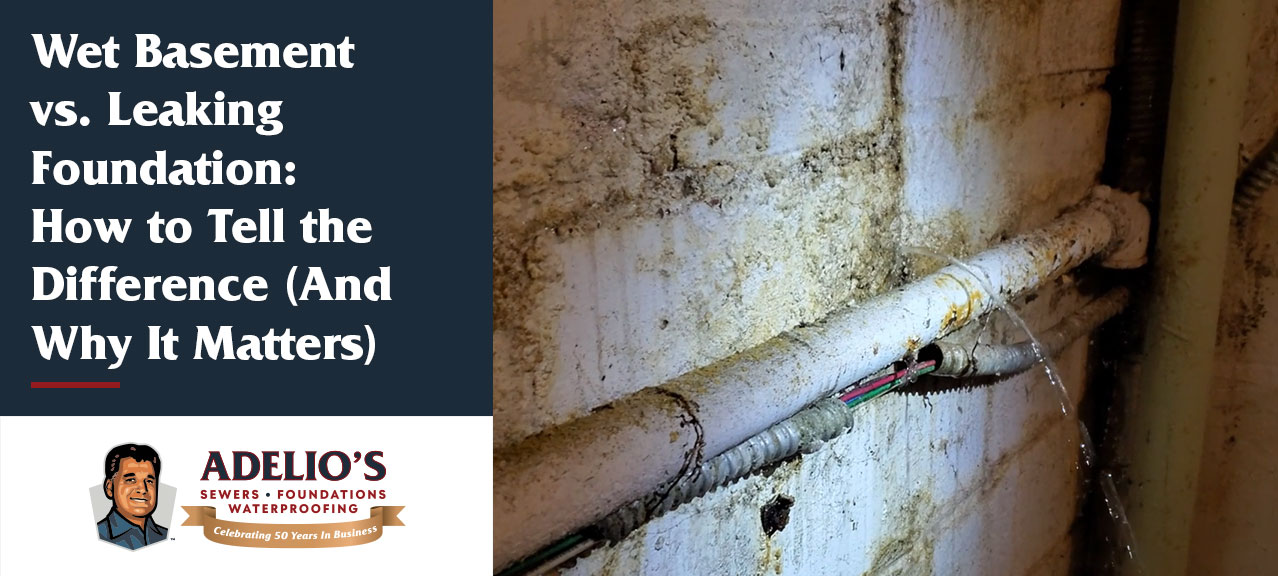
Water in your basement. It’s every homeowner’s nightmare. But before you panic about expensive foundation repairs, you need to understand something critical: not all basement water problems are foundation problems. The difference between a wet basement and a leaking foundation determines everything from your repair approach to how much you’ll spend fixing it.
Understanding wet basement vs leaking foundation issues starts with recognizing that water can enter your basement through two fundamentally different pathways. A wet basement typically results from surface water or poor drainage overwhelming your waterproofing systems. A leaking foundation involves water penetrating through structural cracks or compromised foundation walls. The distinction matters because the solutions are completely different.
This guide helps you diagnose which problem you’re facing, what warning signs to look for, and when you need to call professionals. We’ll give you the knowledge to make informed decisions about protecting your home.
Understanding the Fundamental Difference: Wet Basement vs Foundation Leak
The core distinction between wet basement vs foundation leak problems lies in how water enters your basement and what that reveals about your home’s structural integrity.
A wet basement is primarily a drainage and waterproofing issue. Water accumulates around your foundation due to poor grading, clogged gutters, inadequate drainage systems, or overwhelmed waterproofing. The water finds its way inside through paths of least resistance: floor-wall joints, window wells, or porous concrete. Your foundation itself remains structurally sound. The problem is that water is getting past your home’s defenses.
A leaking foundation indicates structural compromise. Water enters through actual cracks, gaps, or deteriorated areas in your foundation walls or floor. These openings exist because your foundation has moved, settled, or deteriorated. The water infiltration is a symptom of underlying structural issues that need addressing beyond just keeping water out.
Here’s why the distinction matters: fixing a wet basement might cost $3,000 to $8,000 for drainage improvements and interior waterproofing. Repairing a leaking foundation with structural issues can range from $4,000 to $25,000 or more depending on the extent of damage. Treating one problem when you actually have the other wastes money and leaves your home vulnerable.
Regional Factors That Affect Basement Water Problems
Climate and soil conditions significantly influence whether homeowners experience wet basement or foundation leak issues. In regions with clay-rich soils and freeze-thaw cycles, like the Cleveland area, both problems are particularly common.
Clay soils expand when saturated and shrink when dry, creating cyclical stress on foundations. This constant movement can cause foundation cracks over time, transforming what started as a simple wet basement into a leaking foundation requiring structural repair. Homeowners researching cleveland foundation repair often discover their problems began with inadequate drainage that eventually caused structural damage.
Freeze-thaw cycles compound these issues. Water infiltrates small cracks during warmer periods, then expands when it freezes, progressively widening cracks with each cycle. Areas experiencing harsh winters see accelerated progression from minor wet basement issues to serious foundation leaks requiring professional intervention.
Understanding these regional factors helps homeowners recognize that addressing wet basement problems early prevents them from evolving into costly foundation repairs.
Signs of a Foundation Leak: Structural Red Flags
Recognizing signs of a foundation leak helps you identify when water intrusion indicates serious structural problems rather than simple drainage issues.
Crack Patterns That Indicate Foundation Problems
Not all cracks signal foundation failure, but certain patterns demand attention. Horizontal cracks running across foundation walls indicate lateral pressure from soil or water pushing against your foundation. These are serious structural concerns requiring immediate professional evaluation.
Stair-step cracks in block or brick foundations follow mortar joints in a stepped pattern. This crack type indicates differential settlement where one part of your foundation has moved more than another. The water leaking through these cracks is secondary to the structural movement causing them.
Vertical cracks wider than 1/4 inch that are actively widening suggest ongoing foundation movement. While narrow vertical cracks are common and often just shrinkage cracks from concrete curing, wide or growing vertical cracks indicate your foundation is still shifting.
Diagonal cracks running at 45-degree angles from corners of windows, doors, or other openings point to settlement issues. These cracks typically widen over time and allow water infiltration as they grow.
Active Foundation Movement Signs
Foundation leaks accompanied by these symptoms indicate active structural problems:
Doors and windows that progressively stick or won’t close properly. When your foundation moves, it throws door and window frames out of square. If doors that closed easily last year now stick or won’t latch, your foundation is actively shifting.
Visible wall bowing or bulging. Foundation walls that bow inward indicate severe lateral pressure. Even without obvious water leaks, bowing represents structural failure requiring immediate attention.
Gaps between walls and ceilings or floors. Separation at these junction points shows different parts of your home moving at different rates. Water infiltration through these gaps accompanies the structural movement.
Sloping or uneven floors. Place a marble on your basement floor. If it rolls consistently in one direction, your foundation has settled unevenly. This settlement creates cracks that allow water entry.
Water Entry Patterns for Foundation Leaks
The location and pattern of water entry reveals whether you’re dealing with foundation structural issues:
Water coming through cracks in walls or floors. If water actively flows through visible cracks during rain, especially if those cracks are horizontal, diagonal, or stair-stepped, you’re looking at foundation leak issues.
Water pooling at specific wall locations. Foundation leaks typically appear at consistent locations where cracks or compromised concrete allows water penetration. The water doesn’t appear randomly across your basement but concentrates at structural weak points.
Water appearing even during light rain. If your basement floods during heavy storms, it might be a drainage issue. If water appears even during moderate rainfall, structural cracks are likely providing direct pathways for water entry.
Causes of a Wet Basement: Non-Structural Water Issues
Understanding the causes of a wet basement helps you identify problems that stem from drainage and waterproofing failures rather than foundation damage.
Poor Exterior Drainage and Grading
The most common cause of wet basements is improper management of surface water. Your yard should slope away from your foundation at a rate of at least six inches over the first ten feet. When grading slopes toward your home or remains flat, water accumulates around your foundation during rain.
This pooling water creates hydrostatic pressure against basement walls and seeks entry points. Even without structural cracks, enough water pressure can force moisture through porous concrete or find its way through the floor-wall joint.
Gutter and Downspout Problems
Your roof collects enormous volumes of water during rain. A typical 1,500 square foot roof sheds over 900 gallons of water during just one inch of rainfall. Without proper gutters and downspouts, all that water dumps directly next to your foundation.
Clogged gutters overflow and concentrate water at your foundation line. Disconnected or damaged downspouts discharge water too close to your home. Downspouts that dump water within a few feet of your foundation are essentially flooding your own basement. This is a drainage problem, not a foundation problem, but it manifests as water in your basement.
Inadequate or Overwhelmed Drainage Systems
Many older homes lack proper footer drains or have drains that have clogged over decades. Without functioning perimeter drains, groundwater has nowhere to go except through your basement walls.
Interior drainage systems like sump pumps can become overwhelmed during heavy rain. If your sump pump can’t keep up with water volume, water backs up and appears in your basement. This represents a capacity issue with your drainage system, not a foundation structural failure.
High Water Table and Seasonal Groundwater
Some properties have naturally high water tables that rise during wet seasons. When groundwater levels rise above your basement floor, hydrostatic pressure forces water up through the floor or through porous areas in walls. This is particularly common in areas near lakes, rivers, or low-lying properties.
This water intrusion happens without any foundation cracks or structural issues. The sheer volume and pressure of groundwater overwhelms your basement’s water resistance. The solution involves drainage systems and sump pumps, not foundation repair.
Basement Window Wells Without Drainage
Window wells collect water during rain. Without proper drainage, water accumulates and eventually seeps through window frames or cracks around the window opening. This creates wet basement conditions localized around windows.
The problem is the window well design or drainage, not your foundation structure. Addressing the window well issue solves the water intrusion without any foundation repair.
How to Tell If Basement Leak Is Serious: Diagnostic Steps
Homeowners wondering how to tell if basement leak is serious can perform several diagnostic checks before calling professionals.
Water Source Location Test
Determine exactly where water is entering. During or immediately after rain, inspect your basement to identify active water entry points. Mark these locations with tape or chalk so you can examine them when dry.
Test 1: Check Exterior Drainage
During rain, go outside and observe water flow around your foundation. Does water pool near your basement? Do gutters overflow? Do downspouts discharge too close to your home? If yes to any of these, drainage problems likely contribute to your wet basement.
Test 2: Examine Entry Points
Is water coming through visible cracks? Is it seeping through the floor-wall joint? Is it appearing at window areas? Water flowing through obvious structural cracks suggests foundation leak issues. Water appearing at joints or seeping through porous concrete suggests drainage overwhelm.
Crack Monitor Installation
For visible cracks, install simple crack monitors available at hardware stores for under $10. These clear plastic gauges attach across cracks and show whether cracks are growing. If cracks actively widen over time, you’re dealing with ongoing foundation movement. Static cracks that don’t change might simply be pathways for water without indicating active structural problems.
Monitor cracks for at least one season to account for normal thermal expansion and contraction. Growing cracks during this monitoring period indicate serious foundation issues requiring professional repair.
Moisture Pattern Analysis
Use a moisture meter (available for $20-50) to check moisture levels throughout your basement. Widespread moisture across multiple walls and floor areas suggests general drainage problems overwhelming your waterproofing. Concentrated moisture at specific crack locations indicates foundation leak issues at those structural compromises.
Timing and Conditions Documentation
Keep a log of when water appears and under what conditions:
- Does water appear only during heavy rain or even during light rainfall?
- Does water show up during spring snowmelt or year-round?
- Does water appear within hours of rain or days later?
Water appearing quickly during any rain suggests structural pathways. Water appearing only during extreme weather or sustained wet periods suggests drainage system overwhelm.
Professional Moisture Intrusion Testing
For difficult-to-diagnose situations, professionals use specialized equipment:
- Thermal imaging cameras reveal moisture inside walls not visible to the naked eye
- Moisture meters measure exact humidity and water content levels
- Hydrostatic pressure testing determines if groundwater pressure is forcing water through porous concrete
These professional assessments cost $200-500 but provide definitive diagnosis of your water source.
Foundation Water Damage: Long-Term Consequences
Understanding foundation water damage potential helps homeowners recognize why prompt action matters regardless of whether you have a wet basement or foundation leak.
Structural Deterioration from Moisture
Persistent moisture exposure weakens foundation materials over time. Concrete exposed to constant moisture can experience spalling, where the surface deteriorates and flakes away. Steel reinforcement bars (rebar) inside concrete foundations rust when moisture reaches them, expanding and cracking concrete from within.
Wood structural elements in contact with foundations absorb moisture and rot. Rim joists, sill plates, and floor joists deteriorate when basements remain persistently wet. This structural wood damage can cost tens of thousands to repair if allowed to progress.
Mold and Health Hazards
Basements with recurring moisture develop mold growth within 24-48 hours. Mold spores cause respiratory issues, allergies, and can exacerbate asthma. Some mold species produce mycotoxins that create serious health risks.
Mold remediation costs $1,500 to $10,000 depending on the extent of growth. But remediation only works if you address the underlying moisture problem. Removing mold without fixing water intrusion means mold returns within months.
Property Value Impact
Basement moisture problems significantly affect home values. Home inspectors flag water stains, efflorescence (white mineral deposits), musty odors, and visible mold. Buyers either walk away or demand substantial price reductions to cover remediation costs.
Undisclosed water problems can lead to legal action after sale. Many states require sellers to disclose known water intrusion or foundation issues. Failing to disclose creates liability if buyers discover problems after closing.
Increased Energy Costs
Wet basements lose heating and cooling efficiency. Moisture in basement air makes HVAC systems work harder to maintain comfortable temperatures. Insulation that becomes damp loses R-value and effectiveness. These efficiency losses increase utility bills month after month until moisture issues are resolved.
Basement Waterproofing: Solutions for Wet Basement Issues
Professional basement waterproofing addresses wet basement problems that stem from drainage and moisture management rather than structural foundation issues.
Interior Waterproofing Systems
Interior drainage systems are the most common solution for wet basements. These systems involve:
Perimeter Drain Installation: A drainage channel installed along basement walls collects water before it can pool on your floor. Perforated pipe in a gravel bed directs water to a collection point.
Sump Pump Systems: Water collected by drains flows to a sump basin where a pump removes it from your basement. Quality systems include battery backup to protect your basement during power outages that often accompany severe storms.
Vapor Barriers: Installed on foundation walls, vapor barriers prevent moisture from penetrating through porous concrete while directing any moisture down to the drainage system.
Interior waterproofing costs $3,000 to $8,000 for typical residential basements. Installation takes 2-4 days and requires cutting a perimeter trench in your basement floor, installing drainage components, and restoring the concrete surface.
Exterior Waterproofing Solutions
Exterior waterproofing provides the most comprehensive protection against water intrusion. The process involves:
Excavation: Digging around your foundation to expose exterior walls
Surface Preparation: Cleaning walls and repairing any damage
Waterproof Membrane Application: Applying liquid or sheet membrane directly to foundation walls
Drainage Board Installation: Installing dimpled boards that create drainage channels
Footer Drain Systems: Perforated pipe at the footer level collects water before it reaches walls
Backfill and Grading: Restoring excavated areas with proper drainage gravel and soil
Exterior waterproofing costs $8,000 to $20,000 or more depending on basement size and accessibility. It’s more expensive than interior solutions but addresses water at the source and provides maximum protection.
Drainage Improvements
Sometimes the most cost-effective solution involves improving site drainage:
Gutter and Downspout Extensions: Directing roof runoff at least 10 feet from your foundation costs $300-1,000 and solves many wet basement problems.
Grading Improvements: Regrading to create proper slope away from your foundation costs $1,000-5,000 depending on the extent of work required.
French Drains: Installing perimeter French drains to intercept surface water costs $2,000-6,000 and prevents water from ever reaching your foundation.
These drainage solutions address causes of a wet basement without requiring foundation repair work.
Foundation Leak Repair: Structural Solutions
When diagnostics confirm you have foundation leak issues rather than simple drainage problems, structural repairs become necessary. Professionals specializing in cleveland foundation repair understand that fixing leaking foundations requires addressing both the structural damage and the water intrusion.
Crack Injection and Sealing
For foundation leaks coming through cracks, injection repairs provide effective solutions:
Epoxy Injection: Creates rigid bonds that restore structural integrity. Best for dry cracks that aren’t actively leaking. Costs $500-1,500 for typical applications.
Polyurethane Injection: Expands to fill voids and remains flexible. Ideal for actively leaking cracks. Costs $500-2,000 depending on crack size and location.
These repairs address both the water infiltration and restore some structural continuity to cracked concrete. However, if cracks resulted from ongoing foundation movement, stabilization may be necessary to prevent new cracks from forming.
Foundation Stabilization Systems
When foundation leaks accompany wall bowing, settlement, or other movement, stabilization prevents further damage:
Carbon Fiber Reinforcement: High-strength straps applied to walls prevent further inward movement. Costs $3,000-8,000 for typical basements. Works for walls with less than 2 inches of deflection.
Wall Anchors: Mechanical systems that can pull walls back toward original position. Costs $5,000-10,000. Effective for severe bowing.
Piering Systems: For settling foundations, piers transfer weight to stable soil and can lift foundations back to level. Costs $9,000-30,000 depending on extent of settlement.
These structural repairs address the root cause of foundation leaks. Once the foundation is stabilized, crack repair prevents water intrusion through damaged areas.
Combination Approaches
Many foundation leak situations benefit from combining waterproofing and structural repair:
- Stabilize foundation walls to stop movement
- Inject cracks to restore structural integrity and stop leaks
- Install interior drainage as backup protection
- Improve exterior drainage to reduce pressure on repaired foundation
This comprehensive approach costs more initially but provides maximum protection and prevents recurrence of problems.
Wet Basement Repair Cost: Budgeting for Solutions
Understanding wet basement repair cost helps homeowners budget appropriately for necessary work.
Cost Ranges by Solution Type
Drainage-Only Solutions:
- Gutter/downspout improvements: $300-1,000
- Grading corrections: $1,000-5,000
- French drain installation: $2,000-6,000
Interior Waterproofing:
- Basement drainage system with sump pump: $3,000-8,000
- Vapor barrier installation: $1,500-4,000
- Dehumidification systems: $1,200-3,000
Exterior Waterproofing:
- Full exterior excavation and waterproofing: $8,000-20,000+
- Partial exterior waterproofing: $4,000-12,000
Foundation Leak Structural Repairs:
- Crack injection: $500-2,000 per location
- Carbon fiber reinforcement: $3,000-8,000
- Wall anchors: $5,000-10,000
- Foundation piering: $9,000-30,000
Factors Affecting Total Costs
Several factors influence your final wet basement repair cost:
Basement size: Larger basements require more materials and labor
Problem severity: Multiple issues cost more to address than single problems
Accessibility: Difficult-to-reach areas increase labor costs
Soil conditions: Clay soils or high water tables may require more extensive solutions
Home age: Older foundations may need additional repairs discovered during work
Cost of Inaction
Delaying repairs leads to exponentially higher costs. Minor drainage problems that could be solved for $2,000-3,000 can evolve into major foundation failures requiring $20,000+ in structural repairs. Mold remediation adds another $1,500-10,000. Damaged personal property, health issues, and reduced home value compound financial impacts.
Early intervention when you first notice wet basement vs leaking foundation signs provides the most cost-effective approach.
When to Call Professionals vs. DIY Solutions
Some wet basement issues can be addressed with DIY efforts, but foundation leak problems require professional expertise.
Safe DIY Improvements
Homeowners can handle these drainage improvements:
- Cleaning gutters and installing gutter guards
- Extending downspouts away from foundation
- Improving grading near foundation (minor work)
- Sealing minor concrete surface cracks with sealant
- Installing or maintaining window well covers and drainage
These simple improvements cost $100-500 in materials and can solve or significantly reduce wet basement problems caused by poor surface drainage.
When Professional Help Is Necessary
Call professionals for:
- Foundation cracks wider than 1/4 inch
- Horizontal cracks or stair-step crack patterns
- Visible wall bowing or displacement
- Water intrusion during light rainfall
- Multiple symptoms of foundation movement
- Recurring wet basement despite DIY drainage fixes
- Any situation where you’re unsure of the cause
Professional assessment costs $200-500 and provides accurate diagnosis. This small investment prevents costly mistakes from addressing the wrong problem or attempting repairs beyond DIY capabilities.
Choosing Qualified Contractors
Look for contractors with:
- Proper licensing and insurance
- Experience with your specific problem type
- References from recent local projects
- Clear written estimates with scope of work
- Warranties on materials and labor
- No-pressure consultation approach
At Adelios, we provide honest assessments that distinguish between wet basement and foundation leak issues. We explain what you’re facing, why it’s happening, and what solutions make sense for your situation and budget.
Frequently Asked Questions
What’s the difference between a wet basement and a leaking foundation?
A wet basement typically results from drainage and waterproofing issues where water overwhelms your home’s defenses but your foundation remains structurally sound. A leaking foundation involves water entering through structural cracks or compromised areas, indicating foundation damage or movement. The key difference is whether water intrusion signals structural problems or just inadequate water management. This distinction determines whether you need drainage improvements or foundation repair.
How can I tell if my basement water problem is serious?
Serious basement water problems show these signs: water appearing through horizontal or diagonal cracks, visible wall bowing, doors and windows that stick or won’t close, sloping floors, water intrusion during light rainfall, or cracks that are actively widening. If you observe any of these symptoms, professional evaluation is necessary. Less serious issues involve water appearing only during extreme weather through minor cracks or floor-wall joints with no structural movement signs.
Can I fix a wet basement myself?
You can address some causes of a wet basement yourself, including cleaning gutters, extending downspouts, improving surface grading near your foundation, and sealing minor surface cracks. These DIY improvements cost $100-500 and often solve drainage-related wet basement problems. However, foundation leaks with structural implications require professional repair. Attempting DIY foundation repairs can worsen problems and create safety hazards.
How much does it cost to fix a wet basement vs. a leaking foundation?
Wet basement repairs addressing drainage and waterproofing typically cost $3,000-8,000 for interior systems or $500-5,000 for exterior drainage improvements. Leaking foundation repairs involving structural issues range from $4,000-25,000+ depending on whether you need crack repair, wall stabilization, or foundation piering. The significant cost difference makes accurate diagnosis critical before starting repairs.
Will fixing my gutters really stop my wet basement?
For many homes, yes. Improper gutter and downspout drainage is a leading cause of wet basements. A typical roof sheds over 900 gallons during one inch of rain. If that water dumps next to your foundation, it will find its way into your basement. Extending downspouts 10+ feet from your foundation costs $300-1,000 and often eliminates or dramatically reduces wet basement problems. It’s the most cost-effective first step.
Do I need exterior or interior waterproofing?
Interior waterproofing ($3,000-8,000) is less expensive and effective for most wet basement situations. It manages water that reaches your foundation by collecting and removing it before it causes problems. Exterior waterproofing ($8,000-20,000+) is more comprehensive and addresses water at the source but requires excavation. For severe or persistent water intrusion, exterior waterproofing provides superior protection. Professional assessment determines which approach suits your situation.
How do I know if foundation cracks are just cosmetic or serious?
Cosmetic cracks are typically vertical, narrow (less than 1/8 inch), not growing, and don’t allow water infiltration. Serious cracks are horizontal or diagonal, wider than 1/4 inch, actively widening, allow water entry, or accompany other signs like sticking doors or bowing walls. Any crack allowing water intrusion during rain needs attention. When in doubt, professional inspection provides definitive assessment.
Should I repair my wet basement before selling my house?
Yes. Basement water problems are major red flags for buyers. Home inspectors will document water stains, musty odors, and visible damage. Most buyers will either walk away or demand significant price reductions. Repairing wet basement issues before listing typically provides better financial returns. Professional repairs with warranties become selling points, and you’ll likely recoup most repair costs through higher sale price and faster sale.
Protect Your Home with Accurate Diagnosis
Understanding the difference between wet basement vs leaking foundation determines your entire repair approach, costs, and long-term home protection. A wet basement involves drainage and waterproofing challenges that can often be addressed with relatively affordable solutions. A leaking foundation signals structural issues requiring more extensive repairs to prevent progressive damage.
The key is accurate diagnosis before spending money on solutions. Treating a foundation leak as a simple wet basement wastes money on waterproofing that doesn’t address structural problems. Conversely, pursuing expensive foundation repairs when you actually need drainage improvements costs far more than necessary.
Watch for signs of a foundation leak including horizontal cracks, wall bowing, progressive door sticking, and water intrusion even during light rain. These symptoms demand professional structural evaluation. Recognize causes of a wet basement like poor grading, inadequate gutters, or overwhelmed drainage that can often be remedied with more affordable waterproofing and drainage solutions.
Don’t let uncertainty prevent you from addressing water problems. Both wet basements and leaking foundations worsen over time when ignored. Early intervention costs far less than repairing damage from years of water intrusion. Professional assessment provides the clarity you need to make informed decisions.
We understand that basement water problems are stressful. You’re worried about costs, unsure what’s causing the issue, and concerned about making the wrong repair decision. Those concerns are valid, and you deserve honest answers from professionals who prioritize accurate diagnosis over maximizing repair bills.
Ready to find out what’s really causing your basement water problem? Contact our team or call 216-250-3075 today for a thorough assessment. We’ll examine your specific situation, explain whether you’re dealing with a wet basement or foundation leak, and recommend appropriate solutions with honest pricing. No pressure. No unnecessary upselling. Just straightforward guidance from professionals who care about protecting your home the right way.