
If you’ve got water finding its way into your basement, you’ve probably already searched “basement waterproofing Cleveland” and landed on two very different answers: interior drainage systems and exterior waterproofing. Contractors sometimes push one over the other without explaining why, which leaves homeowners guessing whether they need a simple fix or a full excavation.
The truth is, both approaches work, but they solve different problems, at different price points, with different levels of disruption to your yard and foundation. Here at Adelio’s Contracting, we’ve spent decades helping Northeast Ohio homeowners figure out which system actually fits their home, their soil, and their budget. Here’s how to think through the decision.
Why Cleveland Basements Are Especially Prone to Water Intrusion
Cleveland’s basements deal with a specific combination of conditions that make water intrusion more common than in many other parts of the country:
- Older housing stock. Many homes in Cleveland Heights, Lakewood, and Shaker Heights were built decades ago with foundation materials and drainage that were never designed for today’s rainfall patterns.
- Freeze-thaw cycles. Ohio winters cause soil around your foundation to expand and contract repeatedly, which can widen existing cracks and create new entry points for groundwater.
- Heavy seasonal rainfall. Spring storms and snowmelt saturate the soil around foundations, building up hydrostatic pressure that pushes water through walls, floors, and joints.
- Clay-heavy soil. Much of the region sits on dense clay, which drains slowly and holds water against the foundation longer than sandier soil would.
These factors are part of why basement water problems are such a common call for homeowners across our service area, and why the right long-term fix depends on understanding where the water is actually coming from before choosing a system.
What Is an Interior Drainage System?
An interior drainage system, often called interior drain tile or a French drain, is installed along the inside perimeter of your basement, typically just beneath the floor slab. It’s designed to intercept water once it has already entered the soil beneath your home and route it to a sump pump, which then discharges it away from the foundation.
How It Works
A channel is cut along the base of the basement walls, a perforated drainage pipe is installed, and the system is connected to one or more sump pumps. Water that seeps through the foundation walls or up through the slab gets captured before it can pool on your basement floor.
Pros of Interior Drainage
- Less invasive: no digging up your yard, landscaping, or driveway
- Generally faster to install and less expensive upfront
- Works well for homes where hydrostatic pressure is building up beneath the slab
- Can be paired with a sump pump and battery backup for added protection during power outages
Where It Falls Short
Interior drainage manages water after it enters your basement’s walls or floor. It doesn’t stop water from reaching the foundation in the first place, which means the foundation material itself is still exposed to ongoing moisture and pressure over time.
What Is Exterior Waterproofing?
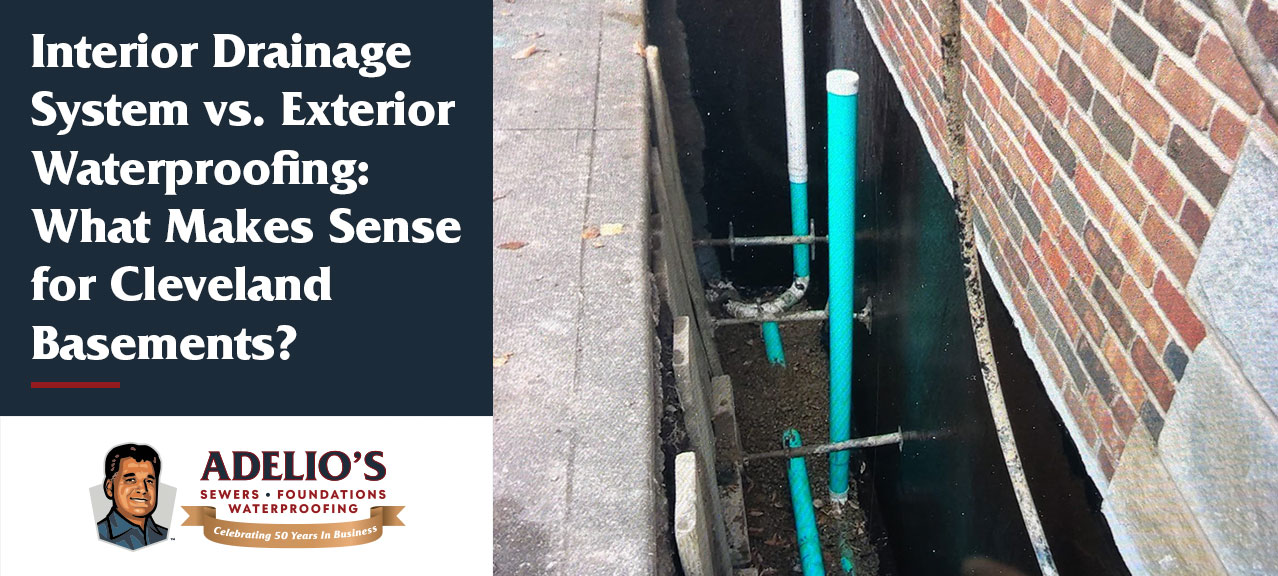
Exterior waterproofing takes the opposite approach: it stops water before it ever reaches your foundation walls. This typically involves excavating around the perimeter of the home, applying a waterproof membrane or coating directly to the foundation wall, and installing an exterior drain tile system that carries groundwater away from the house entirely.
How It Works
Crews excavate down to the footer along the affected foundation wall, clean and repair any cracks or gaps, apply a waterproof barrier, and install drainage piping that directs water to a discharge point away from the home. In some cases, this pairs with grading or gutter improvements to keep surface water from pooling near the foundation to begin with.
Pros of Exterior Waterproofing
- Addresses the source of the problem rather than managing symptoms
- Protects the foundation material itself from ongoing water exposure
- Can resolve issues tied to poor grading, downspout placement, or surface drainage
- Often the more comprehensive long-term solution for older homes with deteriorating foundation walls
Where It Falls Short
Exterior waterproofing is more invasive and typically costs more upfront, since it involves excavation and landscaping restoration. It may not be practical if a home is close to a property line, has mature landscaping you want to preserve, or has structures like a patio or deck built over the affected area.
So Which One Makes Sense for Your Cleveland Home?
There’s no universal answer. It depends on where the water is coming from and what your foundation actually needs.
Interior Drainage Might Be the Better Fit If:
- Water is entering through the slab or the base of the walls, not through visible exterior cracks
- You want a lower-cost solution that doesn’t disturb your landscaping
- Your foundation walls themselves are in reasonably good condition
- You’re managing a finished basement and need a solution that works from the inside
Exterior Waterproofing Might Be the Better Fit If:
- You have visible cracking, bowing, or deterioration in the foundation wall
- Grading or drainage issues around the home are contributing to the problem
- You want to address the root cause rather than manage water after it gets in
- You’re already planning landscaping or hardscaping work that would make excavation easier
In many cases, a combination of both systems provides the most complete protection: exterior waterproofing to keep water from reaching the wall, and interior drainage as a backup for any water that still finds its way in during heavy storms.
Why an Inspection Matters Before You Decide
Every basement tells a slightly different story, and the only way to know for sure which system (or combination) makes sense is a hands-on evaluation. A qualified inspector will look at where water is entering, the condition of your foundation walls, your grading and gutter setup, and your soil conditions before recommending a path forward.
Skipping this step is how homeowners end up paying for a system that doesn’t address the actual source of the problem. If you’re not sure whether your foundation walls themselves need attention alongside drainage work, it’s also worth having a look at foundation repair options at the same time, since the two issues often go hand in hand in older Cleveland-area homes.
Keeping Your System Working Long-Term
Whichever system you choose, sump pumps, drain tile, and discharge lines all need periodic attention to keep working the way they should. Clogged lines, failed pumps, and blocked discharge points are common reasons a previously working system starts letting water back in. Adelio’s maintenance and service plans are built around catching these issues before they turn into a wet basement again.
Get a Straight Answer From a Local Team You Can Trust
Cleveland basements don’t all have the same problem, and they don’t all need the same fix. Whether you’re dealing with a damp corner after every storm or standing water after a heavy snowmelt, the right next step is a professional evaluation, not a guess based on what worked for your neighbor’s house.
Contact Adelio’s Contracting to schedule a basement inspection. We’ll walk you through exactly what’s happening beneath your home and give you an honest recommendation on whether interior drainage, exterior waterproofing, or a combination of both makes the most sense for your foundation.