
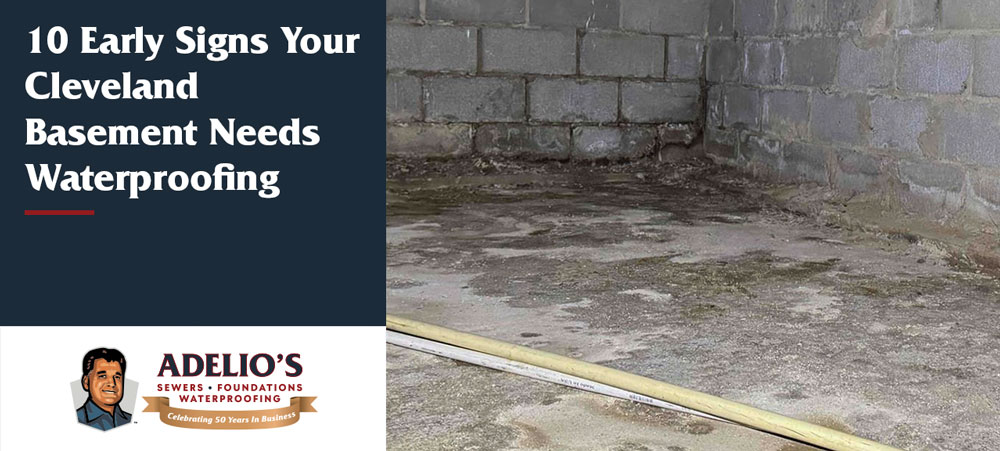
Most basement water problems do not start as a dramatic flood. They usually begin as small, easy-to-ignore signs that something is not quite right. The good news is that catching these signs early almost always means a simpler and less expensive fix. Here are ten things Cleveland-area homeowners should be watching for.
1. A White or Chalky Powder on the Walls
That white or grayish powder on your basement walls is called efflorescence. It forms when water moves through the concrete or block, carries dissolved minerals to the surface, and evaporates. The powder itself is harmless, but it tells you that water is actively passing through your wall on a regular basis.
2. A Musty or Damp Smell
A persistent musty odor in the basement, even when you cannot see any standing water, usually means moisture is present somewhere out of sight. Mold and mildew grow in damp conditions and produce that familiar smell before they ever become visible.
3. Paint That Is Peeling or Bubbling
When moisture is pushing through a foundation wall from outside, it eventually causes paint to peel, flake, or blister. If you notice this happening near the base of the wall or in corners, water is the likely cause.
4. Cracks in the Foundation Wall
Small hairline cracks in poured concrete are common and often just cosmetic. The ones to take seriously are horizontal cracks, stair-step cracks in block foundations, and any crack that appears to be growing or where one side has shifted. These can be active entry points for water.
5. Water on the Floor After Rain
If you notice puddles or wet spots on your basement floor after a heavy rain or during snowmelt season, your drainage system is not keeping up. This is one of the most common calls Adelio’s receives from homeowners across Cuyahoga and Lake counties each spring.
6. Rust Stains Near Drains or Column Bases
Rust streaks around floor drains, along the base of steel support columns, or near any metal hardware in the basement point to ongoing moisture exposure. Once metal components start corroding, the damage tends to progress quickly without intervention.
7. Water Stains on the Walls or Floor
Even when water is not currently present, the stains it leaves behind are a reliable clue. Tide marks or discoloration on the walls show how high water has reached in the past. Those marks help identify where water is entering and how serious the problem has been.
8. Walls That Are Bowing or Leaning Inward
If your basement walls look like they are bending inward or bulging, that is a structural issue caused by soil pressure from outside. Northeast Ohio clay soil is particularly hard on foundations because it expands and contracts so much with seasonal moisture changes. Bowing walls should be evaluated by a professional as soon as possible.
9. Window Wells Filling Up With Water
Basement window wells that are too shallow or clogged with debris will collect water during a rainstorm. If the water has nowhere to drain, it will eventually come in through the window frame. This is a straightforward problem to fix when it is caught early.
10. The Basement Always Feels Humid
If your basement consistently feels damp or you notice condensation forming on pipes, windows, or walls, excess moisture is present. While some condensation is normal in summer, persistent humidity usually means water vapor is moving through the foundation and sets the stage for more serious problems over time.
A Small Problem Today Is a Bigger Problem Tomorrow
If you are seeing any of these signs in your home, it is worth contacting a Cleveland waterproofing company before things go further. Homeowners in Mayfield Heights, Fairview Park, Strongsville, Solon, Rocky River, and throughout Northeast Ohio can reach Adelio’s Contracting for a free evaluation.
Call us or book online today.