
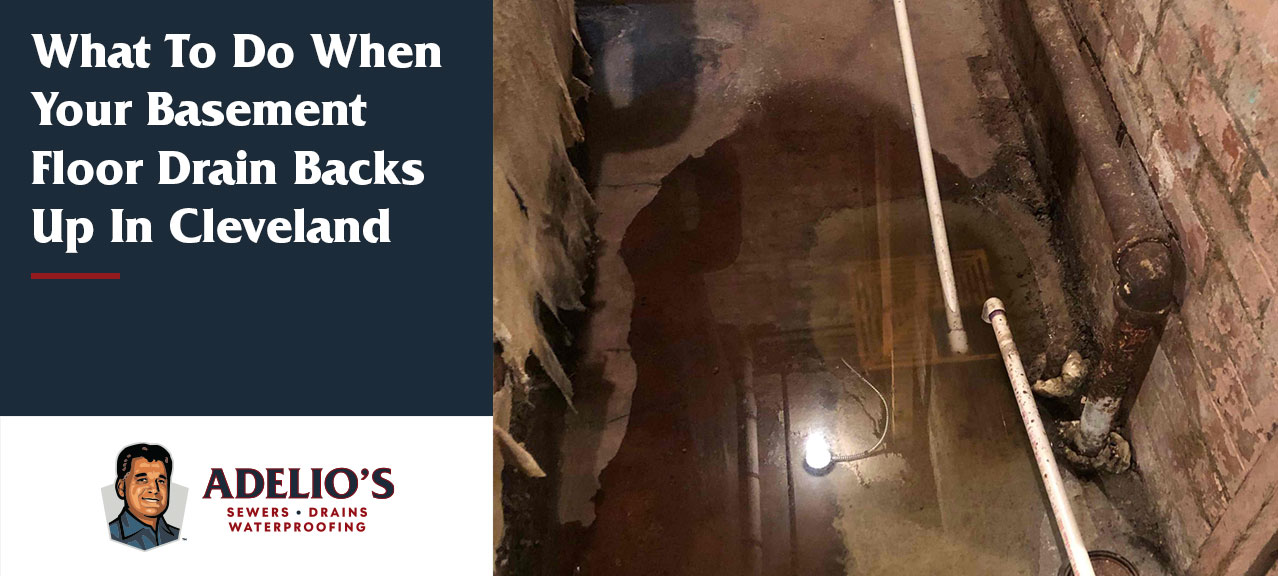
A basement floor drain backup is one of those plumbing problems that tends to announce itself at the worst possible moment—during a heavy storm, right when you’re running appliances, or out of nowhere on a quiet evening. Water coming up through a floor drain instead of going down is almost always a sign that something upstream or downstream in your drainage system isn’t working the way it should.
Here’s how to make sense of what’s happening and what to do about it.
First: Understand What Your Basement Floor Drain Actually Does
A basement floor drain is designed to handle water that ends up on the basement floor—overflow from a water heater, a washing machine, minor flooding, or general cleanup. It connects to your home’s drain-waste-vent system and, in many Cleveland-area homes, ties into either a sanitary sewer lateral or a floor drain system that connects to the city’s combined sewer.
When water backs up through that drain, it means something is preventing water from flowing in the right direction—down and out of your home.
Common Causes of Basement Floor Drain Backups
The cause matters because it determines the fix. A few of the most common culprits:
1. Municipal sewer surcharge during heavy rain
Many older neighborhoods in the Cleveland area—including parts of Cleveland Heights, Lakewood, Euclid, and similar communities—are served by combined sewer systems that carry both stormwater and sanitary sewage in the same pipe. During a major rain event, these systems can become overwhelmed. When capacity is exceeded, water and sewage can be pushed backward through connected drains, including your basement floor drain.
This type of backup is often seasonal and tied directly to storm events. If it consistently happens during heavy rain, the combined sewer is almost certainly a factor.
2. A clog in your home’s main drain line or lateral
If the backup happens regardless of weather, or if multiple drains in the home are slow or backing up at the same time, the issue may be a blockage somewhere in your home’s main drain line—either inside the house or in the lateral line between the house and the city connection. Grease buildup, root intrusion, debris accumulation, or a partial pipe collapse can all create blockages that send water looking for the nearest exit.
3. Root intrusion in the sewer lateral
Tree roots are a very common issue in Cleveland-area homes with older clay tile or cast iron laterals. Roots seek out moisture and can infiltrate pipe joints, eventually causing partial or full blockages. A backup caused by roots is unlikely to resolve on its own and tends to get worse over time without intervention.
4. A failed or missing floor drain trap
Basement floor drains have a trap that holds water to prevent sewer gases from coming back up through the drain. If that trap has dried out (common in drains that rarely see use), it won’t back up with water—but you may smell sewer gas. If the trap itself is damaged or missing, it can also allow backpressure from the sewer system to come up more easily.
What to Do Right Now
If you’re dealing with an active backup, a few immediate steps:
- Stop using water in the house if multiple drains are backing up simultaneously. Running sinks, flushing toilets, or running the washing machine will add more water to an already overwhelmed system.
- Avoid contact with the backed-up water if sewage is involved. Treat it as a biohazard until you know what’s in it.
- Check whether neighbors are experiencing the same issue at the same time. If they are, a sewer surcharge from the municipality is the likely cause—and the city may need to be notified.
- Don’t pour drain cleaners down the floor drain. They won’t fix root intrusion, a sewer surcharge, or a structural pipe issue, and they can complicate the diagnosis.
Longer-Term Solutions Worth Knowing About
Once the immediate situation is under control, addressing the underlying cause is the right next step. Depending on what’s going on, that might include:
- Sewer lateral inspection and cleaning: A camera inspection of your lateral line will show exactly what’s happening inside the pipe—roots, buildup, offset joints, or a collapse. Hydro-jetting can clear blockages that snaking can’t fully address.
- Sewer lateral repair or lining: If the pipe itself is damaged, cracked, or compromised by roots, lining the pipe (cured-in-place pipe lining) or replacing the lateral may be necessary. This is especially common in homes with original clay tile laterals.
- Overhead sewer conversion or backwater valve installation: For homes in areas prone to sewer surcharges, a backwater valve on the main drain line can prevent sewage from backing up through floor drains during storm events. An overhead sewer conversion is a more comprehensive solution that re-routes your home’s plumbing above the sewer surcharge level.
- Floor drain trap maintenance: For drains with dried traps, simply adding water to the trap periodically will maintain the seal. A trap primer can automate this for drains that see infrequent use.
Sewer and Drain Backup Solutions in Northeast Ohio
Basement floor drain backups in the Cleveland area have a few common causes—and the right fix depends on which one you’re dealing with. Getting a proper diagnosis before jumping to a solution is what separates a real fix from a temporary workaround.
At Adelio’s Contracting, we handle sewer lateral inspections, cleaning, repairs, and lining throughout the Cleveland area. If your basement floor drain is giving you trouble—whether it’s a new problem or something that keeps happening every time it rains—give us a call at (440) 943-2233 or book online. We’ll find out what’s actually going on and walk you through your options.