
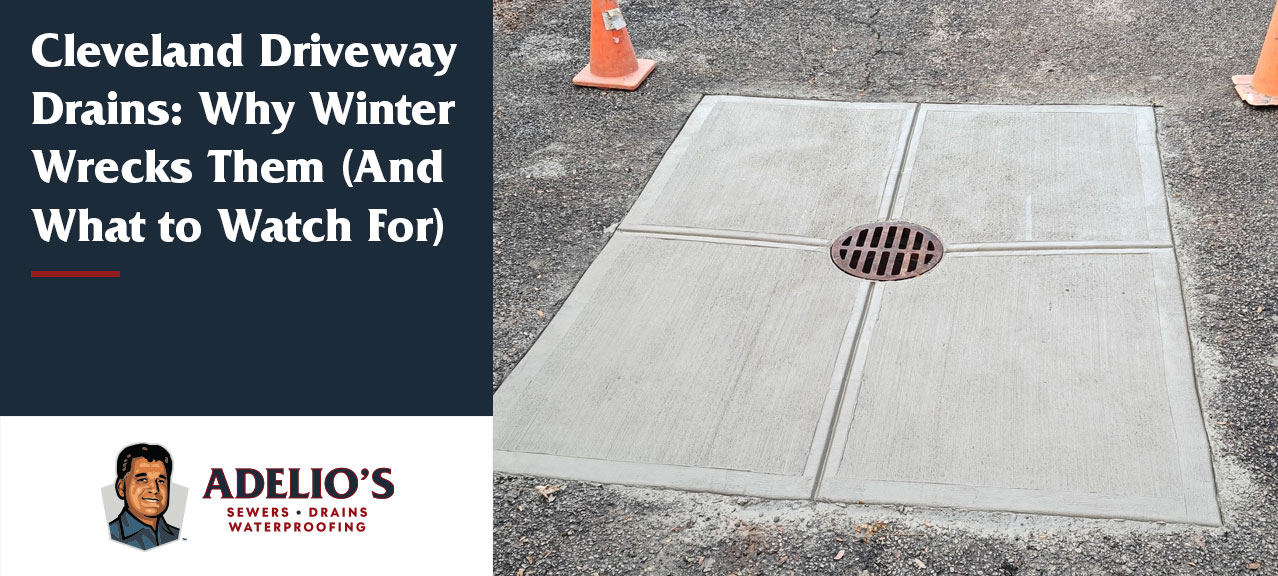
If you’ve lived through a few Northeast Ohio winters, you already know they’re tough on cars, roads, and concrete. What’s easier to miss is what winter does to your driveway drainage. When the snow finally melts, a lot of homeowners suddenly notice standing water in the driveway or right in front of the garage. Very often, the culprit is a driveway drain or catch basin that took a beating over the winter.
Understanding how these systems fail—and how to spot early warning signs—is the first step toward preventing water from migrating toward your foundation, seeping into the basement, or breaking down your driveway.
What a Driveway Catch Basin Actually Does
A driveway catch basin is a simple but important piece of your drainage system. It’s designed to collect surface water and move it away from your driveway, yard, and foundation before it can cause problems.
Most driveway drains include:
- A grate or drain opening at surface level
- A basin box below the surface that collects debris and sediment
- Drain piping that carries water away from the property
When everything is working, rainwater and melting snow flow into the grate instead of pooling in low spots. The challenge is that these drains sit flush with the pavement, which puts them directly in the line of fire for plows and shovels every winter.
Why Winter Is So Hard on Driveway Drains
In a climate like Cleveland’s, driveway drains go through months of abuse from plows, ice, and constant freeze-thaw cycles. A few common failure points show up again and again:
- Snow plow impact
When plow blades clip the edge of the drain, they can crack the concrete around the basin or bend the metal frame that holds the grate. Even a small hit can loosen things up and open gaps where water can get in. - Freeze–thaw expansion
Water that seeps into tiny cracks around the collar or basin doesn’t just sit there. When temperatures drop, it freezes and expands, forcing those cracks wider and breaking off pieces of concrete. As this repeats all winter, the damage compounds. - Soil movement under the basin
The same freeze-thaw cycles that affect foundations also move the soil under a catch basin. When the ground shifts, the basin can tilt, sink, or separate from the surrounding concrete, leaving the grate uneven or unstable. - Heavy ice and vehicle load
If ice forms inside the basin and vehicles continue to drive over it, that weight transfers straight into the structure. Over time, the basin can fracture, settle, or partially collapse.
The result is a drain that no longer sits where it should, no longer seals the way it should, and no longer moves water the way it was designed to.
Early Warning Signs Homeowners Should Watch For
Most driveway drain failures don’t happen overnight. They show up first as small but noticeable changes around the basin. Some red flags to keep an eye on:
- Water pooling in the driveway after rain instead of draining quickly
- A grate that feels loose, rattles, or looks tilted
- Cracked, broken, or missing concrete around the drain opening
- A drain that appears sunken or shifted relative to the surrounding pavement
- Heavy soil, gravel, leaves or mulch washing into the basin after storms
- Standing water in the basin
On their own, these might seem like minor annoyances. Left alone, they can turn into much bigger problems—driveway settlement, trip hazards, water inside the garage, or even basement seepage as water is allowed to sit closer to the foundation.
How Driveway Catch Basin Replacements/Repairs Are Typically Done
The right fix depends on how much damage has already occurred. In most cases, fixing the problem involves one or more of the following steps:
- If you have a damaged catch basin it would need to removed and replaced. This helps lock the drain back into place and restore a tight seal between the basin and the driveway surface: Bent grates, warped frames, or broken tops often need to be replaced so the drain can safely handle traffic and maintain it’s proper opening so that it can withstand the yearly wear and tear.
- Repairing or replacing drain lines when underground piping has cracked, collapsed, or separated, sections of the line may need to be repaired or replaced so water can move away from the driveway instead of backing up.
Why It Pays to Address Catch Basin Issues Early
A damaged driveway drain is more than just a cosmetic issue. Ignoring it can lead to:
- Water entering the garage or basement
- Accelerated cracking and deterioration of the driveway surface
- Soil erosion beneath the pavement, which can cause more settlement
- Extra strain on the rest of your home’s drainage system
Spring is one of the best times to take a close look at your driveway drain. Once the snow and ice are gone, you can see where water actually goes—and where it’s starting to sit. Catching problems now, when they’re smaller, almost always costs less than waiting until the drain has failed completely and the surrounding concrete needs major work.
Professional Driveway Drain and Catch Basin Repair in Northeast Ohio
If you’re seeing standing water in your driveway, a crooked or sunken grate, or cracking around your drain after this winter, it’s a good idea to have it checked before the next big storm rolls through.
At Adelio’s Contracting, we work with driveway drains, catch basins, and drainage systems throughout the Cleveland area. Our team can diagnose what’s really going on, explain your options, and recommend repairs that help protect your driveway, foundation, and basement from water damage—not just this season, but for many winters to come.